Sini Nagpal, who recently completed her postdoctoral training at Georgia Tech and is a graduate of its Bioinformatics Ph.D. program, and her former advisor, Professor Greg Gibson of the Center for Integrative Genomics and School of Biological Sciences, have published a new study in Nature Genetics showing that a person’s genetic risk for common diseases is deeply shaped by the environmental and social circumstances in which they live.
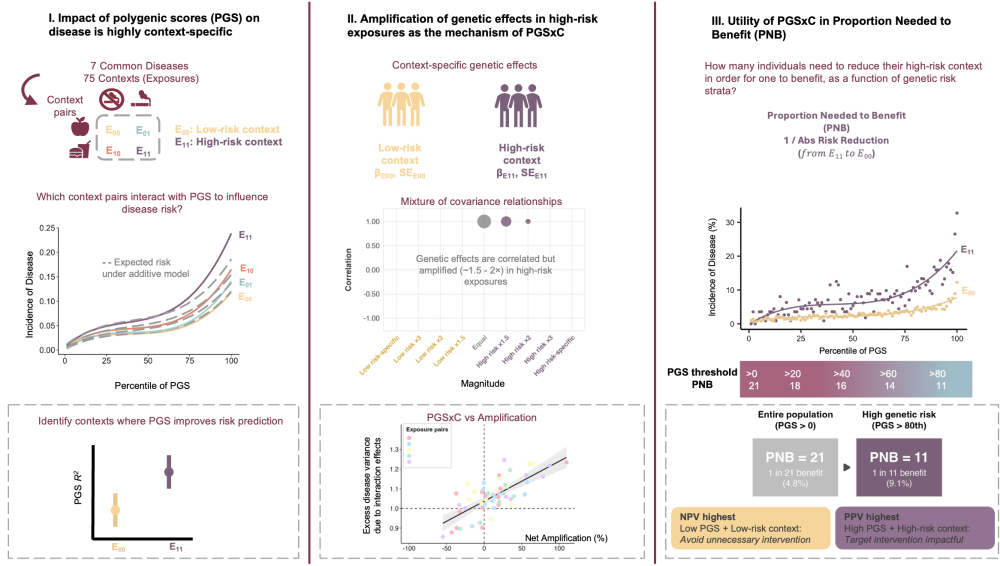
Analyzing health and genetic data from more than 408,000 UK Biobank participants, Nagpal and Gibson tested how polygenic risk scores — which combine the effects of many genetic variants into a single risk estimate — interact with combinations of lifestyle, biochemical, and socioeconomic factors across seven common diseases, including coronary artery disease, type 2 diabetes, and chronic kidney disease. They found that genetic risk is consistently amplified, not simply added to, when someone also faces an adverse exposure, whether that's a poor diet, smoking, or a marker of social disadvantage — and that accounting for these interactions meaningfully improves how well genetic scores predict disease. The team also introduced a new metric, the "proportion needed to benefit," to help translate these findings into clinical practice by estimating how many people in a given genetic risk group would need to change a modifiable exposure for one person to benefit.
Nagpal, who recently launched her own research group, the Nagpal Lab (https://nagpallab.github.io/), at the Koita Centre for Digital Health at the Indian Institute of Technology Bombay, will continue this line of work studying polygenic risk and environment interactions in her new role. The study underscores a broader lesson from Georgia Tech's Bioinformatics program: that genetic risk cannot be understood, or applied equitably in medicine, without the context in which people live.