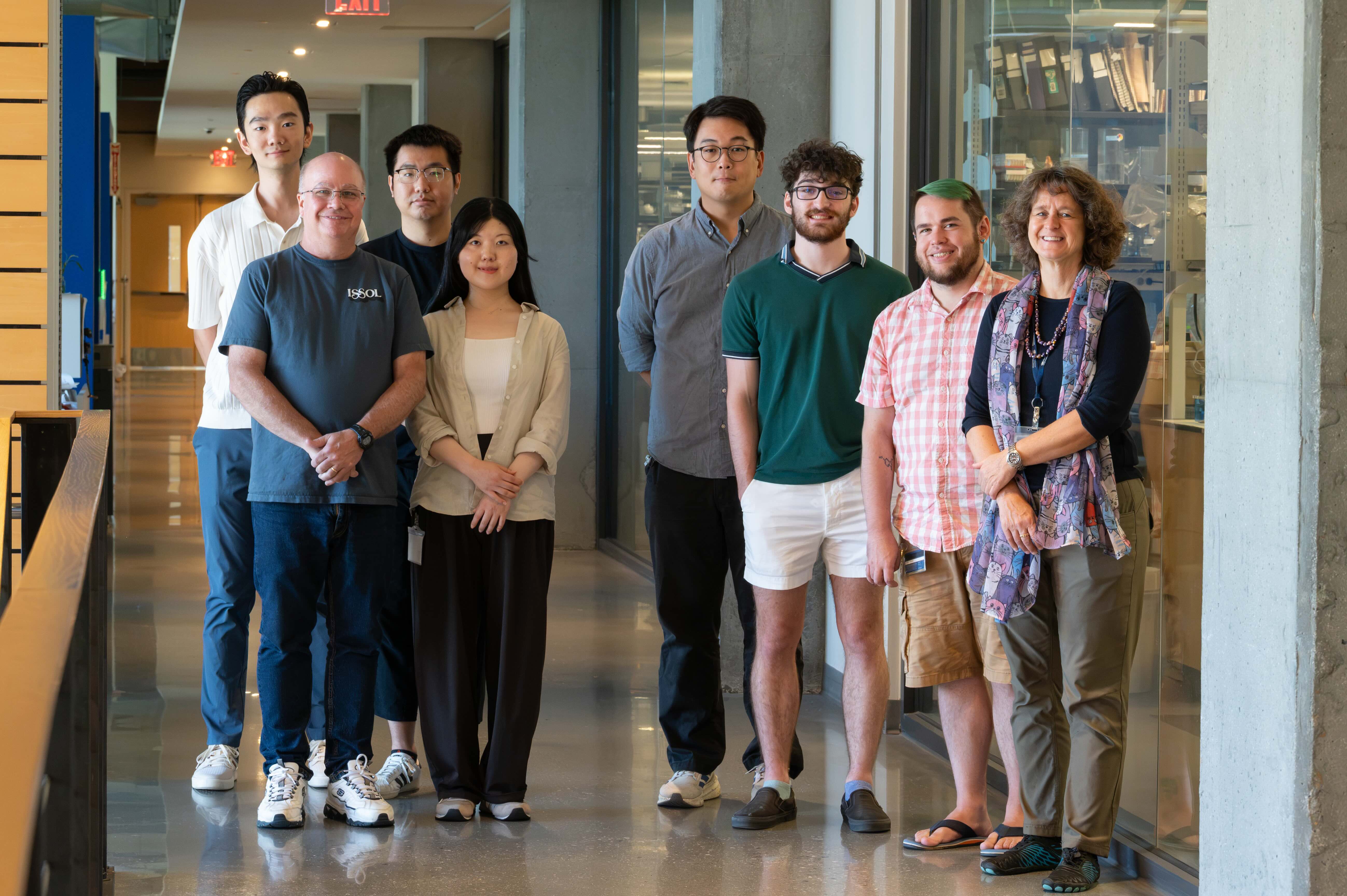
A new study led by Francesca Storici, a professor in the School of Biological Sciences and faculty member of the Parker H. Petit Institute for Bioengineering and Bioscience, has uncovered an unexpected feature of human DNA linked to gene activity and the physical organization of DNA. The findings, published in Cell, could change how scientists think about DNA organization, transcription, and genome function.
DNA and RNA are usually separate molecules inside cells, each with a different job. But small RNA building blocks, called ribonucleotides, sometimes become embedded in DNA during normal cellular activities. Scientists knew these RNA building blocks existed, but until now they did not know where they were located across the human genome or whether they served a purpose.
Storici’s team, working with collaborators across multiple institutions, created the first detailed map of these RNA building blocks across the human genome. Deepali Kundnani, a graduate of Georgia Tech’s Bioinformatics Ph.D. program, was central to the bioinformatics analyses that mapped ~1 million DNA-embedded ribonucleotides per human nuclear genome and uncovered their associations with distinct genomic features and functions. Yeunsoo Lee, a Ph.D. student in the Biology program, was central to the experimental studies demonstrating that ribonucleotide processing modulates transcription-associated DNA supercoiling. Tyler Warner, a Ph.D. student in the Bioinformatics program, further advanced the computational analyses, while Ryan Eckerty, an undergraduate Biology student, performed key in vitro experiments demonstrating how RNase H2 cleavage at embedded ribonucleotides alters DNA supercoiling.
The study also benefited from a longstanding collaboration with Nataša Jonoska, a mathematician at the University of South Florida, who contributed essential quantitative and statistical analyses and provided scientific guidance throughout the work. Together, these complementary computational, quantitative, and experimental contributions were critical to revealing the organization and functional significance of the human nuclear ribome. Additional collaborators across multiple institutions contributed expertise, resources, and scientific insights that greatly expanded the scope and comprehensiveness of the study.
The researchers found that they are not randomly scattered. Instead, they are distributed in distinct patterns across the genome. The researchers call this genome-wide landscape of DNA-embedded ribonucleotides the human nuclear “ribome.”
“Ribonucleotides embedded in DNA have traditionally been viewed mainly as mistakes that need to be removed,” Storici said. “Our findings suggest a different perspective: they can influence the physical properties of DNA and may have biological functions that we are only beginning to understand.”
The team discovered that these embedded RNA building blocks are especially common near the starting points of active genes, where cells begin reading genetic instructions to make RNA. Their abundance also increases with gene activity. These regions experience physical stress as DNA is repeatedly accessed and used. The researchers found evidence that the embedded RNA building blocks influence how tightly the DNA twists and coils in these areas. This DNA twisting, known as supercoiling, is closely associated with transcription.
The findings suggest that these RNA building blocks are more than accidental leftovers from normal cellular processes. Instead, they can modulate DNA supercoiling, revealing a previously unrecognized connection between embedded ribonucleotides, DNA topology, and transcription.
“One of the most exciting findings is that processing ribonucleotides embedded in DNA can change DNA supercoiling,” Storici said. “This provides a new connection between the chemical composition of DNA, its physical organization, and transcription.”
The work also may help scientists better understand diseases linked to problems removing embedded RNA from DNA, including rare autoimmune disorders. More broadly, the discovery could open a new area of investigation into the roles of embedded ribonucleotides in human genome biology.
By providing the first comprehensive map of these RNA marks in human nuclear DNA, the study shows that what once appeared to be simple molecular mistakes may contribute to how the genome is organized and functions. The discovery opens new opportunities to explore how embedded ribonucleotides influence DNA topology, transcription, and genome maintenance.
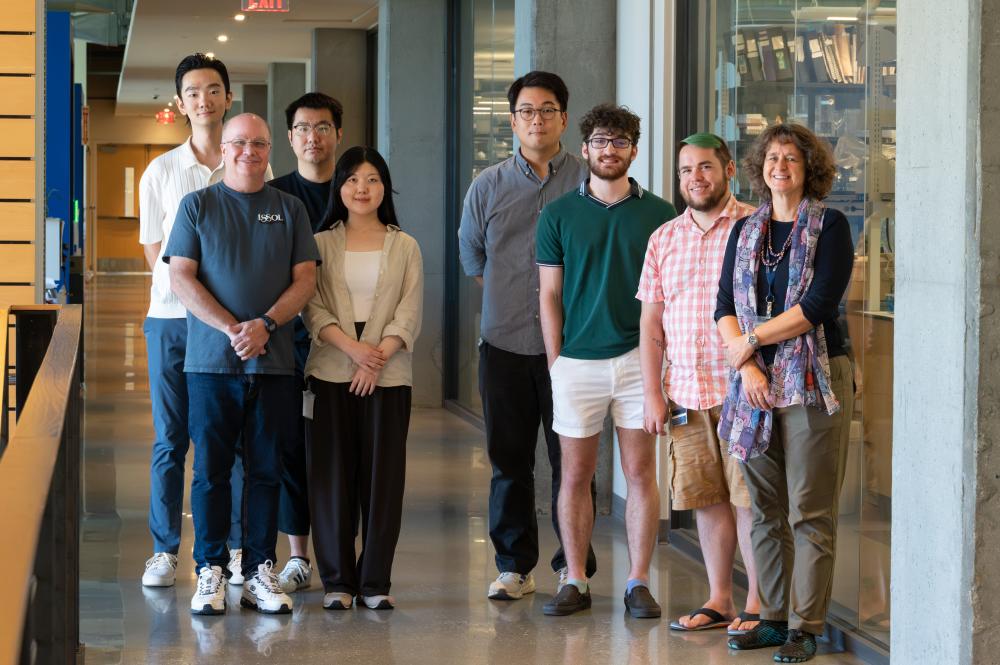
Group photo from left: Yilin Lu, Biology, Gary Newnam, lab manager, Mo Sun, Bioinformatics, Miharu Yasumuro, Biology, Yeunsoo Lee, Biology, Ryan Eckerty, Undergraduate Biology, Tyler Warner, Bioinformatics, Francesca Storici